Lesson 2: Abraham and Foreordination

35852_all_004_001-preexistenceBeing raised deeply within Mormonism there are some concepts that have become the water I’ve swam in. Certain bits of theology and specific verses I’ve heard read over and over again, embedding themselves deep within my consciousness. I accepted them as truth before I was even old enough to scrutinize them.  I’ve aged. And I’ve studied. In recent years, I’ve wandered into theology, pulling bits and pieces from various sources. Along the way, I’ve encountered ideas and insights that have resonated and that seem to solve problems that my life demanded solutions for. None of these ideas at the time seem to conflict or contradict my childhood Mormon lessons. But I’ve brought them in, planted them like seeds in my heart, and have enjoyed the wonderful fruits of peace, expansiveness, and grace that I have in real ways experienced.

But as my faith foundation has shifted along the way, there have been times, going through my Mormonism as I do, in the weekly correlated Sunday School lessons for example, when I’m confronted with these life-long, deeply recognizable verses that force me to reckon with the contradictions that have built up over the years – the very real tensions that exist between Mormon theology and the theology of making my life work.

This week is one example:

Abraham 3:

22 Now the Lord had shown unto me, Abraham, the intelligences that were organized before the world was; and among all these there were many of the noble and great ones;

23 And God saw these souls that they were good, and he stood in the midst of them, and he said: These I will make my rulers; for he stood among those that were spirits, and he saw that they were good; and he said unto me: Abraham, thou art one of them; thou wast chosen before thou wast born.

and in D&C 138

53 The Prophet Joseph Smith, and my father, Hyrum Smith, Brigham Young, John Taylor, Wilford Woodruff, and other choice spirits who were reserved to come forth in the fulness of times to take part in laying the foundations of the great latter-day work,

54 Including the building of the temples and the performance of ordinances therein for the redemption of the dead, were also in the spirit world.

55 I observed that they were also among the noble and great ones who were chosen in the beginning to be rulers in the Church of God.

Coming at these verses again with new eyes, I find them deeply uncomfortable. For one thing, I know first hand this theology was used by some to justify the church’s priesthood ban to black people, which has been discredited officially by the modern church. For another, what of those of us who haven’t been called into major leadership positions within the church? What of women who aren’t given this opportunity, and what of the countless billions of people inhabiting the earth throughout its history, some in the most humble of circumstances? Finally what of my mom, who has had trouble just leaving her house for pretty much her entire life?

Taking even a cursory scan of the world, it’s pretty easy to see the incredible injustices and inequality. I’m still haunted by the scene in the beautifully haunting book, Behind the Beautiful Forevers, of the trash collector, hit by a car, and ignored for hours as he dies on the street, and then disposed of without attempts to find loved ones to notify of his death. One way to deal with this, I suppose, is to point to a forgotten pre-existent world and assume those born into difficulty, weakness and limitations deserved it for their lack of pre-existent valiancy.

Maybe my mother was not valiant enough to be born free from the mental illnesses and afflictions that bothered her, her entire life? What did I do in my pre-earth life to deserve my social anxieties? Or my father’s mother who struggled with mental illness?

I reject this kind of thinking. I think we all were called into weakness, limitations and suffering. I think we are weak to help us learn humility, I think we have injustice and inequality in this world, to remind us to have compassion, concern, and grace for each of those around us, especially those whose suffering exceeds are own.

Perhaps, these verses are just too narrow. Perhaps there could have been another pre-existent scene in which God gathers another group pre-existent spirits and saw their goodness, virtue and humility to exceed even those of the first and then proclaimed:

“And God saw these souls and wept, seeing that they were pure, lovely and good and proclaimed, these I will call into suffering, greater than most. Some will be born into poverty, some will suffer severe limitations of body, mind or spirit, some will be prone to addiction, some will suffer abuse. Most will be neglected and forgotten. But these are my truly chosen ones.”

And really, I think this is true for each of us. We all have gifts and weaknesses. We are born limited. We are born to suffer. But also, I think some of us really, truly are born to shine. And we ought to appreciate and revere the truly remarkable gifts some of us bring to this earth and send out as gifts to the world. Dr. Martin Luther King’s legendary orations and leadership in a time of American need. Or our prophets and leaders who organize, bless and uplift. Or our musicians and poets and artists who labor tirelessly in isolation on their craft, coming out just long enough to make this world a little more beautiful for the rest of us.

And let me pause on this point. My wife is a beautiful pianist, but she hasn’t been able to practice since getting married and having kids like she once was able to. To really make inspiring music requires a lifetime of sacrifice. Really, to pull together a single piece, requires hours of dedicated practice, isolated, alone and then to come up out of this isolation to put this sound out there into space for a brief moment.

I think someone has to be called into something like this. Maybe there was something pre-existency for artists and musicians just like those leaders mentioned in that verse above.

I hope we can apply these verses more universally. We were all chosen. We were all among the noble and great ones. It’s just up to us to figure out what we were chosen for. What we were called for. And then, along with that, to appreciate those around us, magnifying their callings in the most expansive ways possible.

Lesson 1: Moses Chapter 1

Introduction

images

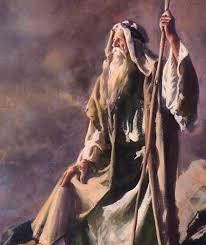
Did I say that this year was on the Old Testament? Well, we can’t start there, instead we detour into our own scriptures first, today Moses 1 in the Pearl of Great Price.  Joseph Smith spent a lot of time in the Bible and he took the liberty to come up with some extraordinary re-translations and expansions of Old Testament. The Book of Mose came out of this.

By the way, I have purchased a couple of books to help guide my way through the Old Testament, but they are en route, and we haven’t really started the Old Testament, so what follows is purely my ideas, and I’m taking a lot of liberties here.

A couple of pre-conditions. I’m reading it to optimize its applicability to my own life. I doubt I will ever encounter God face to face as Moses does here, so doesn’t seem relevant to me. I’m assuming a world as I encounter it now.

Re-reading Moses 1, to me it reads like poetry. Some specifics:

Verse 1: Mountains

God speaks to Moses when he “was caught up into an exceedingly high mountain,”

First of all, how did Moses get to the mountain? I’m imagining it wasn’t planned. Maybe he needed time alone, maybe he was trying to find solace or comfort. But whatever the circumstances he was in a situation where his mind was elevated beyond the daily concerns that tend to overwhelm our day. In other words, he was ready to step into deep time.

Verse 4: Eternity

“my works are without end, and also my words, for they never cease.” God’s words never cease. Most of what we do does end, including and especially our words, the sounds and the music. Daniel Barenboim in his beautiful book on music, talks about the impermanence of sound here:

Sound does not remain, sound has a tendency to drop into silence. Therefore, sound has with silence is the equivalent of life and death. I think the fact that sound is drawn to silence, therefore sound has a tendency to die, that means that every note that you play or sing has a tendency to die puts you in direct contact with the feeling of death more than anything I can think of because its not in your imagination only because its physically in front of you whether you are playing or listening.

But there’s also sometime permanent about it as well here:

Sound is extraordinary because it doesn’t live in this world. Whoever makes a sound, he is literally bringing this sound into the world. And yet when it comes to this world, it suddenly acquires a human dimension, it acquires a dimension that makes humans move. I know know of no other phenomenon that is a purely physical phenomenon that takes another dimension.

If God’s works and words never cease, what specifically does that mean? I can think of experiences and emotions in my life, both good and bad, that etch deep within me. They become part of me and if I’m eternal, and if God’s words can embed within me, they become eternal as well.

Verse 6: Grace and Truth

Let me assume this is the primary substance of God, grace and truth. This is what constitutes divinity, grace and truth. In that sense, God knows us, inside and out, all parts of us, our good and our bad, our darkest secrets and our most proud, public achievements, and most importantly, the broad context of our lives. If this is true, God’s grace means, we are loved anyway. I think this is how we should all aspire to be. To know things as they really are as fully and completely as possible, and then to approach the world with as much compassion and grace we can muster.

Verse 6: All things are Present For I know them all

Imagine that all things are now, present. We’re perfectly aware of everything around us. We ignore nothing. How often do I sleepwalk through my day. Ignore real suffering and especially how often do I miss a problem I’m in a position to solve. Are there people or things calling for my attention that I purposely cast aside?

I’m not sure I’m capable to be in a constant state of presence and awareness. But this is a divine attribute and something I should strive for.

Verse 20: The bitterness of hell

God leaves Moses and he is left alone. In this moment, Satan visits him and demands Moses worship. Moses refuses and in the exchange Satan expresses frustration causing Moses to feel the “bitterness of hell”.

There are two possibilities each of us must reckon with. We can either find connection and solidarity with each other in love and equality and concern. Become present and aware. Or we can withdraw within and demand others to pay attention to us. In other words, we can make everything about ourselves or we can be more concerned with our relationships and our connection.

I have had experiences with both and at times I’ve sought for and received attention and praise. And it’s incredible and fulfilling but temporary and fleeting. There have been times when I’ve wanted it but didn’t get it and I’ve fallen into the bitterness of rejection.

I think God here shows us the better way.

Verse 34: Adam, which is many

“And the first man of all men have I called Adam, which is many.” Ok, this is weird. Adam which is many? This, for me, gives room for Adam as an archetype and not a real person and theological room for evolution – of which Mormonism is officially neutral.


I’m Going All in on the Old Testament This Year

downloadYou know by now, I’m Mormon, right? As a Mormon, we have these really intense Sunday services, three hours worth, the second hour of which is Sunday School. The Mormon church has an extended scriptural cannon that goes beyond the Bible and for the purposes of Sunday School, we spend a year on each one. Getting through all of them in four years – the Old Testament, the New Testament, the Book of Mormon, and Church History – primarily the Doctrine and Covenants. This year is the Old Testament. These lessons then repeat every four years.  As a lifelong member, I have now sat through these lessons multiple times, and did I say they repeat?

The church organizes Sunday School in a very particular and perfectly valid way. We are a church of hierarchy, revelations and prophets. Much of this, then, is driven from the top down and much of it began in the 1960’s correlation headed up by then apostle, Harold B. Lee. The result of this is that Mormon Sunday School, is a very directed walk through the scriptures as organized and informed within modern Mormon interpretations and prophetic revelation frameworks.. We are informed by the scripture, but more often the scripture is used to firm-up these more modern frameworks and understandings.

I’m fine with this approach, but this year, in my personal journey through the Sunday School curriculum, I’m going to pull from other sources. Most importantly, I’m going to try to drink as deeply as I possibly can from the scriptures themselves and give less heed to the manual prompts. This will likely mean I will get different kinds of lessons than the ones intended from church correlation. Which I think is the whole point of personal scripture study.

There are a couple of potential consequences to this approach. I’ll be a little more disconnected from the flow of the in-class discussion. I don’t want to disrupt this flow. I’ll try to participate still, but I’ll have to find moments of overlap, some Sundays, perhaps I won’t find them. And it’s a large class, even when I have a comment to share, there’s not always an opportunity. But at a minimum I’ll try to listen this year, I promise.

But because I will likely trudge down slightly (or significantly) different paths through the Old Testament than the class, I’m going to use this blog to express whatever insights I find.

This is not a New Year’s resolution. I may completely flame out. We’ll see. I’ll do it, time, energy and interest permitting. I’m hoping for weekly, but we’ll see.

A couple of thoughts about the Bible and the Old Testament specifically:

First of all, one of my reference books which has been highly recommended from multiple of people I know, written by a BYU professor and Mormon scholar, David Bokovoy, is “Authoring the Old Testament”.  He wrote a nice introductory article recently, entitled 5 Things to Know Before Studying the Old Testament.  His basic suggestion is to avoid treating the Old Testament as a single book. It’s not, obviously. It’s a vast, complicated library of perspectives and genres over a thousand year history. As such, it’s full of contradictions and tensions and is easy to misinterpret. His basic recommendation is to recognize this, have fun with it, recognize its antiquity, feel free to re-apply its lessons to our own circumstances, but don’t get carried away. It really wasn’t written for our day and don’t try to force it too much.

I think this should be exciting. I hope it is. Again, I may flame out. We’ll see.

My Prayer for the New Year

I pray that I can enjoy each moment of the year as it passes, to be fully present, to take care of each breadth, to make more room for myself and for others. I pray that I can strive a little bit less and forget myself a little bit more. I pray that I will have patience with myself in the forgetting. I pray that I can allow myself to grow in the ways I was meant to grow, through nurture, care, love and concern and in turn do the same for others. Rather than fall into the traps of expectations, manipulations and self-will, trying to move down preconceived paths I was never meant to go down. I pray that I can make my own little garden a little more nutrient and conducive for natural growth, bearing more abundant fruits to both enjoy and share with others. My prayer is in a little more surrender, a little more peace and as the serenity prayer suggests, a little more wisdom and courage.

My Mother Fell At the Airport

mom_and_meIt was a bad fall, though she didn’t get injured, not really, well, she bruised her knee. It was bad because it was so dramatic and she is getting old and frail and it brought a crowd of people and eventually the airport paramedics.

My mother turned 80 the Monday before Thanksgiving. A few months ago, my sisters and I planned a special get together in Salt Lake City an hour drive north from where she was born and raised and where she married my dad. My mom doesn’t like to leave her house much, let alone her city. Recently, I invited her over to my house to hear my son’s Suzuki book three cello recital, but she declined. It was too late for her, and she wasn’t dressed, nor had any desire to get dressed.

But she was excited to go up to Utah, to visit Payson, to see her Grandmother’s grave, to do a temple session in the Payson temple, to see her brother and of course her daughters. She hasn’t seen my younger sister since my dad died, over five years ago. She’s seen my older sisters more recently who are more able to make the trip down to see her. Like I said, my mom does not like to leave her house much. If you want to see her, you have to make the effort.

At any rate, we had planned this trip, to fly up to Payson on Thursday morning, stay through the weekend together with my sisters to celebrate her 80th birthday. On the way there, I got into my own flying habits forgetting I was also responsible for a frail 80 year old woman who doesn’t get out much. My first mistake was that I did not check in our bags.

Which worked out ok, though I was largely responsible for them. And I tried to be, hauling two suitcases and two carry-on bags onto the plane, while my mom, went toward the back of the plane without me. This proved to be too much for me, so as we left the plane, I asked her if she could at least drag one of the suitcases on wheels from the plane, while I managed the rest.

This seemed to work for a while. We navigated our way through the gate and toward the exit. I was thinking ahead, knowing we had to get our rental car. I worried about the escalator (tripping hazard) and we went down the elevator instead. Coming off the elevator about to turn toward the exit, she fell, tripping on I’m not sure what. Perhaps I rushed her, perhaps she was tired, forced to walk far more than she was accustomed.

It wasn’t an awkward fall, where you try to catch yourself, she fell straight forward. I don’t believe she hit her head, but I’m not sure, I was a little in front of her eyeing the exit when it happened. The only thing that hurt was her knee. The paramedics came. We refused the ambulance but promised we would have it checked out. She got a wheel chair and I got someone to push her to the rental car place. Eventually, we did get her to an instant care and had her knee x-rayed. It as bruised, but thankfully not broken.

Why does this matter?

Well, I think about all of my responsibilities, both actual and hoped for. And I often think big. I want to have a voice, a responsibility. I want to speak and I want a lot of people to listen. I’d like an audience. I’d like to accomplish things that a lot of people notice. I’m not proud of this. It’s selfish, self-promoting, self-indulgent. It’s an impulse I try to tap down.

One step beyond this, there are things I purely enjoy doing. I enjoy carting my kids around to their activities. I enjoy going to their concerts or cheering them on in their games or coaching their sports teams. I enjoy my job. I like writing. I really enjoy reading. I mostly enjoy housework, though I should enjoy (and do it) more and better.

But I don’t always enjoy my mom. She’s difficult. She doesn’t give a lot back. I love her deeply. I feel an emotional attachment to her. I care about her. I don’t want her to suffer. But she is nonetheless difficult. And she, all in all, doesn’t ask for a lot. She needs more than she asks for. She didn’t ask for this 80th birthday celebration. She doesn’t even ask for help navigating the steps. She’ll wander on ahead or be left behind without complaint.  But she needs it. She needs someone by her side helping her along. She needs care, company, and attention.

I can’t give her everything she needs. But it’s a significant part of my spiritual practice that I give her what I can. And an even bigger part of my spiritual practice that I’m all in, attentive, aware, and there for her when I am with her.

mom_in_pictures

In Praise of Darkness

In the first weekend of October, Mormon leaders gathered in Salt Lake City to share roughly ten hours of religious discourse. Two talks yesterday got my attention especially as it comes on the first weekend of October and the upcoming Halloween season. The first, by Elder Stevenson used the recent solar eclipse as a metaphor. The sun’s warmth, light and energy can be diminished by something relatively small and insignificant. We need the light and the warmth, but sin and pride might dim that light for a time. Then later, in the priesthood session, Elder Uchtdorf describes darkness as something that “reduces our ability to see clearly.” And implores each of us to stand in a place where we can receive light. I don’t see anything wrong with these points. Of course the sun is beautiful, necessary and life-giving. Of course, we need light to see clearly. We all appreciate the sun rise after a spell of darkness. As Jimmy Hendrix sings from “Are You Experienced”:

If you can just get your mind together
then come across to me
We’ll hold hands an’ then we’ll watch the sun rise
from the bottom of the sea

And you can see that point in Hendrix’s song. In darkness, we aren’t totally ourselves. If we can just “get our mind together” then we can “hold hands an watch the sun rise”.

But I can’t help thinking as I listened to these talks that they are missing something beautiful and necessary about darkness. Mormon theology can be very binary. In the second chapter in the 2 Nephi of the Book of Mormon, Lehi describes an oppositional theology that drives modern Mormonism:

11 For it must needs be, that there is an opposition in all things. If not so, my firstborn in the wilderness, righteousness could not be brought to pass, neither wickedness, neither holiness nor misery, neither good nor bad. Wherefore, all things must needs be a compound in one; wherefore, if it should be one body it must needs remain as dead, having no life neither death, nor corruption nor incorruption, happiness nor misery, neither sense nor insensibility.

That something is either filled with light, goodness and righteousness, or darkness, misery, and evil. We are implored to seek the light and oppose the darkness. This doesn’t ring completely true in my lived experience. At a minimum, it needs to be supplemented with a bit more complexity.

For one thing, the eclipse itself is an interesting metaphor here, because I don’t think people view the actual eclipse as something we need to endure. In fact just the opposite actually happened. During the recent eclipse, thousands of people traveled miles to be within the geographic band where the total eclipse could be experienced. Thousands of people sacrificed time, money and convenience to have a two minute experience in darkness during the middle of the day. They experienced a drastic temperature drop, the stars came out. Many were inspired by the experience. Some may say they found God in darkness. They felt God in the eclipse.

Some of my most sacred experiences have happened camping in the woods in the darkness. I can think of night hikes in the moonlight or nights deep in the woods away from light pollution, able to see the night sky clearly to witness what the sun obscures, a literal innumerable sea of stars. I felt a sense of awe and wonder realizing the scale of the universe and my tiny place within it. In this sense, I was only able to really see clearly in darkness. In this sense, the sun’s light made it difficult for me to actually see some things.

Recently, my son spent a week in Camp Geronimo. I went up for the last day and with him and the other boys, enjoyed the last night campfire. The pounding of the drums as we walked down quietly and reverently toward our seats, made more solemn and humble in the darkness.

I think there’s some things that are both beautiful and important that can only be experienced in darkness. And at times, light itself can be the problem.
Tucson, Arizona passed an ordinance in 1972 to limit artificial light pollution “in order to conserve energy and to preserve the crystal clarity of the dry desert air, which has drawn professional astronomers for more than a century. ”

And there’s something about night that affects the way a person thinks. The thoughts one thinks at night are not the same thoughts that occur in the daytime. Perhaps we’re a more unrealistically ambitious at night? A bit dreamy and visionary? I read “For Whom The Bell Tolls” several years ago, but the passage that stuck with me is the frantic thoughts of the hero of the novel as he compares one’s thinking in the daylight hours with those of the night.

But your plan stinks. It stinks, I tell you. It was a night plan and it’s morning now. Night plans aren’t any good in the morning. The way you think at night is no good in the morning. So now you know it is no good.

There is no question that night time is hard. I know I have a hard time sometimes just going to sleep. But there is something democratically egalitarian about sleep itself. The poor, those in prison, the rich, the single and the married all slumber in the same way. And there is something deeply tragic about those who aren’t physically able to find a good night sleep.

But darkness and night is at the core of the Christian experience. Richard Rohr’s book, “Falling Upward” is a deep dive on how one can only really find God in the darkness. It’s only when we fall are we truly saved.  In the introduction of the book:

In legends and literature, sacrifice of something to achieve something else is almost the only pattern. Dr. Faust has to sell his soul to the devil to achieve power and knowledge. Sleeping Beauty must sleep for a hundred years before she can receive the prince’s kiss. In Scripture, we see that the wrestling and wounding of Jacob are necessary for Jacob to become Israel (Genesis 32:26-32), and the death and resurrection of Jesus are necessary to create Christianity.  The loss and renew pattern is constant and ubiquitous that is should hardly be called a secret at all.

These dark nights of the soul experiences are necessary, essential. We can spend our lives resisting them. Or we can lean into them and experience the beauty and learn the lessons that can only be found in darkness.

The entire time writing this post this song kept playing in my head and so I think it’s the theme of the post. Enjoy.

Religions aren’t good with sex – But neither am I and neither are any of us (It’s Hard)

For one, I’m not sure we are good talking about this in a mature, compassionate way. Much of it is still taboo, or we’re too cavalier about it, or too scared, or too worried we’ll implicate ourselves, or whatever. Consider too, how many public figures are brought down by sexual scandal, and so many of our public scandals are sexual. But also, sex is such a core part of what it means to be human – it’s how we create life, it’s the ultimate expression of intimacy. We are sexual beings. Adam Miller, in a book I cannot recommend enough – please just buy it already – “Letters to a Young Mormon”, has a beautiful little chapter on sex. In particular, how difficult it can be to properly deal with sexual desire especially as one transitions through puberty into adulthood.

This hunger for intimacy is like an ocean. It will come like a flood and you will feel lost at sea. When you are a child, you walked on dry ground. In order to become an adult you’ll have to learn how to swim. You are no more responsible for being at sea than you are for needing to breathe. And, though some may say different, you are not guilty because the ocean is wet. You did not choose this hunger, you did not choose your gender, and you did not choose its orientation.

So, sex is difficult. It’s difficult to talk about properly. We’re cavalier or afraid or harsh. And in this milieu of sexual societal dysfunction, we expect our children to navigate their sexual maturation without scars or stumbles. Society swings on extremes often – sexuality is out in the open in our media and entertainment. Pornography has never been more accessible.  But we, especially the parts of us in religious communities, can be far too harsh. I grew up hearing and believing that sexual sin was a step below murder.

Which is why I think literature is so important. The best books take on the most taboo subjects with vulnerability and honesty. The best art shines light in our dark corners and forces us to confront our deepest secrets. “But even the president of the United States Sometimes must have have to stand naked.”  And if you read literature, you’ll find sex everywhere. I’ve already talked about sex in literature once. Here, I’ll do it again.

Portrait of an Artist as a Young Man

The reason sex is so hard is that it comes on each of us without warning like a flood. One day, we’re innocent (well relatively speaking) with no sexual desire but then puberty comes and now it’s invading our every thought. I exaggerate I’m sure, to an extent. There’s a range and individual circumstances, and differences between genders. This sexual maturation is one of the themes in the book, “Portrait of an Artist as a Young Man”.

This book takes Stephen Dedalus from childhood through young adulthood. Along the way, he struggles to make sense of his growing desires and eventually, impulsively it seems, has sexual encounters with prostitutes. As he’s coming to terms with his actions, this is the type of sermon he hears:

-O, my dear little brethren in Christ Jesus, will we then offend that good Redeemer and provoke His anger? Will we trample again upon that torn and mangled corpse? Will we spit upon that face so full of sorrow and love? Will we too, like the cruel jews and the brutal soldiers, mock that gentle and compassionate Saviour Who trod alone for our sake the awful wine-press of sorrow? Every word of sin is a wound in His tender side. Every sinful act is a thorn piercing His head. Every impure thought, deliberately yielded to, is a keen lance transfixing that sacred and loving heart. No, no. It is impossible for any human being to do that which offends so deeply the diving majesty, that which is punished by an eternity of agony, that which crucifies again the Son of God and makes a mockery of Him.

The idea that each stray thought is as if we struck another blow into the nail piercing the hands of the dying Jesus is something familiar to me and something I internalized in my own religious upbringing, although not with this eloquence or fervor. I remember trying to memorize hymns, in particular, I Stand All Amazed, “That for me a sinner, he suffered, he bled and died”, to keep my head straight.

For Stephen Dedalus,

His fingers trembled as he undressed himself in the dormitory. He told his fingers to hurry up. He had to undress and then kneel and say his own prayers and be in bed before the gas was lowered so that he might not go to hell when he died.

Could it be that he, Stephen Dedalus, had done those things? His conscience sighed in answer. Yes, he had done them, secretly, filthily, time after time, and, hardened in sinful impenitence, he had dared to wear the mask of holiness before the tabernacle itself while his soul within was living mass corruption. How came it that God had not struck him dead? The leprous company of his sins closed about him, breathing upon him, bending over him from all sides. He strove to forget them in an act of prayer, huddling his limbs closer together and binding down his eyelids: but the senses of his soul would not be bound and, though his eyes were shut fast, he saw the places where he had sinned and, though his ears were tightly covered, he heard. He desired with all his will not to hear or see. He desired till his frame shook under the strain of his desire and until the senses of his soul closed. They closed for an instant and then opened. He saw.

I’m not saying that frequenting prostitutes is good and the protagonist’s relationship with women throughout the book is less than ideal. . But Stephen Dedalus is a sympathetic, sincere person struggling to make sense of his place in the world. In many ways, the adult figures in his life were not adequate and the Catholic presence, both preceding his sexual escapades and in response to them were damaging. His response to the fear and loathing reaction of this sermon temporarily inspires change and religious devotion, but only temporarily. He eventually leaves the church and embraces aesthetics on his own terms as an artist. I’m assuming this sort of over-reaction to sexual sin was part of the reasons.

Angela’s Ashes

This book is a memoir of Frank McCourt’s childhood in Irish poverty and neglect, but the over-arching presence in his community is the Catholic church. He discusses his own sexual awakening within the context of immense guilt and terrible misunderstanding. And this book echoes the same themes as Portrait. In this book McCourt talks about his indulgences in masturbation as he enters puberty.

One Redemptorist priest barks at us all the time about the Sixth Commandment. He says impurity is so grave a sin the Virgin Mary turns her face away and weeps.

And why does she weep, boys? She weeps because of you and what you are doing to her Beloved Son. She weeps when she looks down the long dreary vista of time and beholds in horror the spectacle of Limerick boys defiling themselves, polluting themselves, soiling their young bodies, which are the temples of the Holy Ghost. Our Lady weeps over these abominations knowing that every time you interfere with yourself you nail to the cross her Beloved Son, that once more you hammer into His dear head the crown of thorns, that you reopen those ghastly wounds….

but…

I can’t stop interfering with myself. I pray to the Virgin Mary and tell her I’m sorry I put her Son back on the cross and I’ll never do it again but I can’t help myself and swear I’ll go to confession and after that surely after that, I’ll never do it again. I don’t want to go to hell with devils chasing me for eternity jabbing me with hot pitchforks.

Later, Frank has a job that requires him to deliver telegrams to a certain young lady who is sick and dying. She entices him to sex which they continue on most of his weekly visits, until one day, she’s not there and eventually dies. Frank again:

On Monday I follow the funeral to the graveyard on my post office bicycle. I stand behind a tree a distance from the grave. Mrs. Carmody weeps and moans. Mr. Carmody snuffles and looks puzzled. The priest recites the Latin prayers and sprinkles coffin with holy water.

I want to go to the priest, to Mr. and Mrs. Carmody. I want to tell them how I’m the one who sent Theresa to hell. They can do whatever they like with me. Abuse me. Revile me. Throw grave dirt at me.

Again, there’s no way to condone weekly sex with a dying girl while on the job, but the boy was ill-equiped to really understand, manage and deal with the growing desires in his body. The resulting missteps were met with the shame and self-judgment, to the extent that death seemed like the better alternative.

Tess of D’Urbivelle

The previous two examples describe the sexual awakening of two boys as they struggle to come to terms with and manage puberty within a dysfunctional environment. I think the sexual stakes are higher for girls in many ways as society, often unfairly, places most of the burden for modesty on young women’s shoulders. But biology also is at play here. It’s the woman who bears the consequences of an unwanted pregnancy. And that is the field Thomas Hardy mines in this book.

The main character in the book, Tess is both beautiful and desired by multiple suitors, one who rapes and impregnates her. She gives birth to a baby boy who early in life becomes deathly ill. The illness and the nature of the birth puts Tess in a state of late night panic. This is a long excerpt but worth the read:

The household went to bed, and distressed beyond measure, Tess retired also. She was continually waking as she lay, and in the middle of the night found that the baby was still worse. It was obviously dying – quietly and painlessly, but none the less surely.

In her misery she rocked herself upon the bed. The clock struck the solemn hour of one, that hour when fancy stalks outside reason, and malignant possibilities stand rock-firm as facts. She thought of the child consigned to the nethermost corner of hell, as its double doom for lack of baptism and lack of legitimacy; saw the arch-fiend tossing it with his three-pronged fork, like the one they used for heating the oven on baking days, to which picture she added many other quaint and curious details of torment sometimes taught the young in this Christian country. The lurid presentment so powerfully affected her imagination in the silence of the sleeping house that her nightgown became damp with perspiration, and the bedstead shook with each throb of her heart.

The infant’s breathing grew more difficult, and the mother’s mental tension increased. It was useless to devour the little thing with kisses; she could stay in bed no longer, and walked feverishly about the room.

‘O merciful God, have pity; have pity upon my poor baby!’ she cried. ‘Heap as much anger as you want upon me, and welcome; but pity the child!’

She leant against the chest of drawers, and murmured incoherent supplications for a long while, till she suddenly started up.

‘Ah! perhaps baby can be saved!  Perhaps it will be just the same!

She spoke so brightly it seemed as though her face might have shown in the gloom surrounding her. She lit a candle, and went to a second and a third bed under the wall, where she awoke her young sisters and brothers, all of whom occupied the same room. Pulling out the washing-stand so that she could get behind it, she poured some water from a jug, and made them kneel around, putting their hands together with fingers exactly vertical. While the children, scarcely awake, awe-stricken at her manner, their eyes growing larger and larger, remained in this position, she took the baby from her bed – a child’s child – so immature as scarce to seem a sufficient personality to endow its producer with the maternal title. Tess then stood erect with the infant on her arm beside the basin; the next sister held the Prayer-Book open before her, as the clerk at the church held it before the parson; and thus the girl set about baptizing her child.

Her figure looked singularly tall and imposing as she stood in her long white nightgown, a thick cable of twisted dark hair hanging straight down her back to her waist. The kindly dimness of the weak candle abstracted from her form and features the little blemishes which sunlight might have revealed – the stubble scratches upon her wrists, and the weariness of her eyes – her high enthusiasm having a transfiguring effect upon the face which had been her undoing, showing it as a thing of immaculate beauty, with a touch of dignity which was almost regal. The little ones kneeling round, their sleepy eyes blinking and red, awaited her preparations full of a suspended wonder which their physical heaviness at that hour would not allow to become active.

The most impressed of them said:
‘Be you really going to christen him, Tess?’

The girl-mother replied in a grave affirmative.

‘What’s his name going to be?’

She had not thought of that, but a name suggested by a phrase in the book of Genesis came into her head as she proceeded with the baptismal service, and now she pronounced it:

‘SORROW, I baptize thee in the name of the Father, and of the Son, and of the Holy Ghost.’

She sprinkled the water, and there was silence.

‘Say ‘Amen,’ children.’

The tiny voices piped in obedient response, ‘Amen!’

Tess went on:
‘We receive this child’ – and so forth – ‘and do so sign him with the sign of the Cross.’

Here she dipped her hand into the basin and fervently drew an immense cross upon the baby with her forefinger, continuing with the customary sentences as to hsi manfully fighting against sin, the world, and the devil, and being a faithful soldier and servant unto his life’s end. She duly went on with the Lord’s Prayer, the children lisping it after her in a thin gnat-like wail, till, at the conclusion, raising their voices to clerk’s pitch, they again piped into silence, ‘Amen!’

Then their sister, with much augmented confidence in the efficacy of the sacrament, poured forth from the bottom of her heart the thanksgiving that follows, uttering it boldly and triumphantly in the stopt-diapason note which her voice acquired when her heart was in her speech, and which will never be forgotten by those who knew her. The ecstasy of faith almost apotheosized her; it set upon her a glowing irradiation, and brought a red spot into the middle of each cheek; while the miniature candle-flame inverted in her eye-pupils shone like a diamond. The children gazed up at her with more and more reverence, and no longer had a will for questioning. She did not look like Sissy to them now, but as a being large, towering, and awful – a divine personage with whom they had nothing in common.

Poor Sorrow’s campaign against in, the world, and the devil was doomed to be of limited brilliancy – luckily perhaps for himself, considering his beginnings. In the blue of the morning that fragile soldier and servant breathed his last, and when the other children awoke they cried bitterly, and begged Sissy to have another pretty baby.

The calmness which had possessed Tess since the christening remained with her in the infant’s loss. In the daylight, indeed, she felt her terrors about his soul to have been somewhat exaggerated; whether well founded or not, she had no uneasiness now, reasoning that if Providence would not ratify such an act of approximation she, for one, did not value the kind of heaven lost by the irregularity – either for herself or for her child.

So passed away Sorrow the Undesired – that intrusive creature, that bastard gift of shameless Nature, who respects not the social law; a waif to whom eternal Time had been a matter of days merely, who knew not that such things as years and centuries ever were; to whom the cottage interior was the universe, the week’s weather climate, new-born babyhood human existence, and the instinct to suck human knowledge.

Tess does have a religious, spiritual experience in yet another act of extreme dysfunction. Worried that her baby, born illegitimately, outside of the religious marriage sacrament, though of no fault of her own, was condemned to hell if not baptized before his passing, she performs a spontaneous late-night christening. But in the desperate love of a mother for a dying child, she achieved the sanctifying blessing of the spirit and calm assurance that everything would be ok.

Experiences Today

I already referenced some of the shameful messaging and the harsh sermonizing I absorbed as I made my way through puberty and beyond. But I wanted describe an experience of someone else close to me. She left home for Utah for the first time, inexperienced and not really prepared for this thrust into adulthood. There, she hooked up with a boyfriend and soon they were having sex. One way or another, the bishop of her ward found out and forced her into a church disciplinary court. In a room full of men older than her, none of whom she really knew, she was forced to discuss her sexual indiscretions. She was given probation which meant she could not serve in church callings or take the weekly sacrament. It didn’t matter, though, because she never returned to church largely because of this. Regardless of their intentions, she felt shamed and humiliated.

I find this entire thing horrifying. It was decades ago now as were my childhood sex-shaming sermons. I believe the church on the whole as softened its rhetoric and I don’t believe these sexual church courts are always quite as harsh now as they were then. But I believe they still occur and they still drive people out of the church. I believe we still, too often, use shame as a tool to try to control sexual behavior in our young people.

In broader society, however, I worry that the sexual pendulum has swung too far in the other direction. In any event, it’s a mixed bag of confusion. Pornography is easily accessible and has become mainstream and tolerated. Sexuality in general is used in mainstream media for marketing and for other purposes. However, there is a growing intolerance and activism around rape and rape culture, taken, in some cases, to extremes. And now we have a president who bragged about sexual assault and got elected anyway.

Another aspect of Mormonism sexuality, and this may seem trivia to some, but for me the use of a single word bothers me – worthiness. One has to be worthy to attend the temple, worthy to partake of the sacrament, worthy to serve in leadership callings. In this sense, being worthy is something we earn through good behavior. Can you sense the problem with this? How easy is it for someone to take a trivial mental leap from not being worthy because of a sexual mistake to having no worth. I’m not worthy to attend the temple because I have no worth. I’m not worthy to partake the sacrament, something everyone near me will witness, because I have no worth. I’m not worthy to be in my current calling because I have no worth.

It’s a damaging, damaging way of delivering religion.

Solutions?

This is a difficult issue and I don’t have good solutions. But I think there has to be a compassionate, responsible middle way. There has to be a recognition that we all are sexual beings, that sexual attraction is normal and good. That it takes work, effort, time and maturity to fully manage our sexuality correctly. Perhaps some sort of mix is appropriate – responsible sexual education, an open dialogue between parents, partners, and children, a focus on effort over total compliance unless the behavior is egregious or abusive.

I get it, Jesus set the sexual standard sky high:

27 ¶ Ye have heard that it was said by them of old time, Thou shalt not commit adultery:

28 But I say unto you, That whosoever looketh on a woman to lust after her hath committed adultery with her already in his heart.

That is ultimately the standard. Total purity, sexual devotion in thought, body and heart completely focused on one’s committed partner and for no one else. I think it’s unrealistic to expect a young child moving into and through puberty to achieve this standard immediately.

I’ll conclude with Adam Miller from Letters to a Young Mormon:

Chastity is not a kind of perfection. You may have arrived in this world innocent, but chastity is some-thing more. Chastity is not something you are born with and then break or lose, it is something that is made. It is something that must, with years of patient and compassionate effort, be cultivated and grown and gathered and sealed.

We All Want A Revolution

Last summer, my family took a cross country tour heading directly east from Phoenix, through San Antonio, New Orleans, up north through Alabama. We went specifically to Montgomery to visit some of the civl rights museums and sites, including Martin Luther King Jr.’s church and home and the freedom rider’s bus stop. The tour guide for Martin Luther King Jr.’s home was an unexpected highlight. She had a wealth of knowledge, experience and passion for the subject. She is old enough to have experienced the abject poverty that came from being black in the Jim Crow south and talented enough to leverage the gains of civil rights for personal success. She has seen both sides of the civil rights movement and met a number of historical people along the way.

When we made our way into  the kitchen of the home, she described the night when Martin Luther King came home late, lying in bed when the phone rang. Answering, Dr. King heard an anonymous person on the line threatening to kill his family unless they left Alabama in three days. After the call, he sat alone in the kitchen wondering how he could leave town without showing he was succumbing to pressure. Sitting there, pouring his heart to God, he received an overwhelming feeling to continue his work. The rest, of course, is history. The tour guide called that moment a prophetic call and declared that spot sacred. Just a bit later, she looked directly into my eyes and explained how as a young girl she was told to never look a white man directly in the eyes. It was a powerful experience.

The difference between then and now was that America, especially in the south, used identity politics as an oppressive tool to keep some in power and to suppress and terrorize others who wanted more of it. Martin Luther King Jr. was trying to transcend identity politics. In his most famous speech, he describes what most definitely was post-racial, in which we are judged “not by the color of our skin, but by the content of our character”.

Martin Luther King Jr. was fighting identity politics with compassion, energy and love, calling it out with force and energy. He opposed violence with peace and preached the Christian theology of unconditional love for one’s enemies. He did this with the nation watching and won the argument because he had the better position and eventually convinced the country of it. Laws were passed and eventually enforced and legal  segregation collapsed.

I must admit, standing in his kitchen that day and visiting the civil rights sites, I felt moved. I felt a deep desire to become part of something similar, something bigger then myself. I wanted to know what it felt like to stand up to an oppressive power, to dig deep within myself to stand up against evil.

Which brings the political struggle of 2017 into context. Sam Harris recently tweeted in response to the recent events at Charlottesville:

In 2017, all identity politics is detestable. But surely white identity politics is the most detestable of all.

What’s interesting is the triviality of the subject matter that instigated the violence. The marchers were protesting statues but undergirding it was something bigger and darker – white resentment spurred on ostensibly by an economy that’s become more global, less certain, and that’s been threatening to knock the white male worker off from the pedestal he (we) have enjoyed for all these years.

So, given the context of American history, white identity politics is horrifying. Sam Harris has also been critical of black identity politics as manifest in movements such as Black Lives Matter. I can’t begin to defend or explain Harris’ objection to black identity politics, but I think I can add my own explanation for why it’s perhaps not the right response to what ails us in 2017 and why the impulse to recreate the movement led by Martin Luther King Jr. is both understandable and wrong.

First of all, I believe racism necessarily persists. The systems and structures, the culture and the stereotypes that have been built up and driven into the American psyche since before it’s founding doesn’t just disappear without real work. One can’t look at our prison population, the political or business leadership, or the professional class and not notice the disparities of the black and brown representation in these important sectors. One cannot legitimately blame these population discrepancies on the black population themselves. Those in more elite positions have a responsibility here.

But both the cause and the response to black male imprisonment, crime and poverty are multi-faceted, disputed and complicated and will likely require money, resources, and sustained political commitment – a commitment to recruit black male and female teachers, a commitment to enact police reform, a commitment to find alternatives to incarceration that is both compassionate and effective. It’s hard, difficult, potentially expensive and not entirely satisfying work. Essentially, the response is largely political at all levels and will require bi-partisan support to make happen. I don’t think we get to that consensus through screaming matches or protest marches. We get there through painful, difficult conversations, intelligent voting and a deep commitment to the communities we live in.

Martin Luther King’s marches worked because the injustices were obvious and the solutions to it were obvious, though difficult. Stop lynching black people. Stop preventing blacks from enjoying the same resources as white people. Our racial past was shameful, obviously shameful. It took a charismatic preacher and television cameras to make this case and eventually the political will to do the most basic thing was achieved – enforce laws to protect black people from white violence.

What’s interesting here is that Martin Luther King was not evoking identity politics at least in my understanding of it. Rather, he was transcending it. He was arguing against it. It was George Wallace and the segregationists who were invoking identity politics. But identity politics continues, in both political parties in different ways. For the purpose of this essay, let me focus in on the identity politics of the left because it is a big reason why Donald Trump won. And I think that’s the key. If you want to end discrimination, we have to transcend identity politics and strive for a unified reform instead. A drive to reach for what we have in common rather than a constant obsession of what makes us different.

Let me shift to the identification of sexuality.  In my church, one of its leading members took a lot of heat when he said in response to the question “how can homosexual members of the church live and remain steadfast in the gospel” that there are no homosexual members of the church:

If that’s all you heard out of context, you would think he was trying to say gay Mormons simply don’t exist, which is an obvious absurdity. He wasn’t, keep listening.  Rather than classifying an individual along the single dimension of sexual attraction, he wanted to think about each of us as children of God, all connected and alike, though each with an innumerable collection of characteristics that make us unique.  Our sexual attraction is one physical characteristic among many. Really, we all have to walk a life filled with challenges. Our physical, emotional, and social gifts, quirks and limitations will open some doors, close others and provide both challenges and opportunities. The challenge through it all is to extend love and grace in all of the dizzying array of circumstances we encounter in our life.

Of course, there is more to this response that one can take issue with, but in terms of identity, I think Elder Bednar makes a good point.

And I think that’s generally right. Though it’s true that gay, lesbian, transgendered people are discriminated in horrifying ways, especially within the Mormon community. Carol Lynn Pearson writes movingly, story after story about gay Mormons rejected by family, depressed and isolated. It’s heartbreaking and unnecessary. How could a parent reject a child who comes out as gay unless they are somehow able to reduce them solely to their sexual preference and then dismiss them for that alone.  They are still their child. They are still a child of God. They are still worthy of love. Their identity is so much bigger than this one characteristic, no matter what your religious or ethical views of that characteristic might be.

I think one way to transcend identity abuse is to move beyond identity politics. I think there are ways to reach a broader consensus then to boil down a person to a single identifying label. I believe the reason why gay marriage became legal was not because an obsession of the LGBT community as a minority group distinct and different from the rest of us. Rather I think the marginalization of the gay population as an distinctly different class of people was what justified government neglect in the face of AIDS back in the 1980’s. Saying gay people deserved the AIDS virus was a practice in identity politics.

What worked, instead, was when people from all walks of life came out as gay. When we saw ourselves in each other and when we realized how much we have in common.  It wasn’t identity, it was unity that eventually pushed the country toward marriage equality.

Perhaps there is a lesson here.

Because I don’t believe God plays identity politics. I think He actively works against it. In The Vision of All, the Mormon scholar, Joseph Spencer, dives deep into the Isaiah chapters in the Book of Mormon. Basically, the Book of Mormon prophet, Nephi, spends a lot of scriptural real estate quoting and explaining Isaiah. The reason, Spencer argues, has a lot to do with God’s desire to transcend tribalism and to bring peace.

In Chapter VII:

And so God calls Abraham. He takes one man and through him launches a new nation – or really a non-nation, a nation that won’t work like a nation. Remember how the story begins, with God telling Abraham, ‘Get thee out of they country, and from they kindred, and from they father’s house’ (Gen. 12:1). He’s to strip himself of nationality, and then he’s to go wandering. Through him a new nation would come into existence, but from the outset it’s to be a rather different sort of thing from the other nations. They mark borders and claim lands, but his children are to do everything possible to establish peace among the nations. And they’re to do so by blessing ‘all families of the earth’. They’re to rework the very order of the world, replacing the national with the familial, war with peace. This is what the stories of Abraham in the Book of Genesis are all about, remember. Abraham is the figure of hospitality and peace. He’s the guy who makes peace with Egypt, with Lot, with the king of Sodom, with Melchizedek, with Abimelech, with Ephron the Hitite. He’s the guy who welcomes the strangers in and feeds them, the same strangers that nearby nations (Sodom, Gomorrah) treat with terrible violence (rape as a way of putting newcomers into their place). Abraham is the figure of faith and obedience, but also of hospitality, of peacemaking.

His children inherit this task. Israel is born, a whole nation that’s supposed to be ready to assume the Abrahamic project. But the rest of the Bible is the story of their failure to understand this. They want to be a nation like other nations. They want imperial power and they hope to extend their borders. They see their covenantal relationship with God to mean that they’re different from other nations only in that God backs them up. And so they find themselves in constant trouble. And God sends them prophets to get them out of trouble, or at least to call them back to their responsibilities. There’s an especially important prophet who comes along in the eight century when the covenantal status of Israel is under the most serious threat since Egypt. You can guess his name: Isaiah. He lays into Israel, trying to call them back into their covenantal task, to the work of redeeming all the Gentile nations by teaching them peace. At the outset of his remarkable book of prophecy, there’s an especially Abrahamic promise of what’s to come when Israel finally fulfills its task. The Gentile nations won’t be learning war anymore, because they’ll be beating their swords into plowshares and their spears into pruning hooks. Abandoning violence at least, they instead decide to join Israel in worshiping the Lord at his temple.

This is the fulfillment of the Abrahamic covenant.

See what’s described here? The Abrahamic covenant was never meant to separate Israel from the world. It’s goal always was to bring the gentile population into the covenant with them, a covenant of peace and unity. A covenant to “beat swords into plowshares”.

But I get it. Marches are fun. We all want to hold up a sign and shout and scream. We all want a revolution.

But you know, we don’t need a revolution. The problems we’re facing right now doesn’t call for one, because “you know it’s going to be alright”.

But what we really need right now is love. Yes, all we need is love…

Does Religious Faith Have to be Literal?

Christianity at its core is a religion of historical narratives. It’s sacred text is a history of the world starting at its creation up through and past Christ’s life, ministry, death and resurrection. To be sure, there’s plenty of theology and doctrine in these stories, and not just stories, the book contains plenty from ancient prophets, their epistles, poetry, warnings and prophecies. This book and the people who produced it are at the root of three major religions – so there’s a power in these stories and in the history and traditions. But fundamentally Christian scripture is a historical narrative of God’s interaction with ancient people and prophets.

After the last Biblical narrator died, it was up to later believers to collect, interpret and translate the sacred text. It has made its way from its original form through the many translations and editions to its present form, not as a single book, but as a variety of alternative translations. The text is complicated, vague, multi-layered, and contradictory, opening itself up to different interpretations and variety of religious offshoots and doctrine that all claim authority from this book of scripture. The confusion and disagreements begin I believe, almost from the beginning, which is no surprise. We’re all stumbling through, we all “see through a glass, darkly”. A few hundred years after Christ, the council of Nicea was organized to bring together diverging thoughts into a single, unifying Christian belief.  The Nicean Creed drives much of Christianity’s core doctrine today. But even still, we have numerous Biblical interpretations, creeds and churches all claiming authority back to Christ.

So, Christianity is fundamentally rooted in ancient history. Modern day churches are tied very closely to ancient ideas. And as a believer this makes sense because God is the same yesterday, today and forever. The same religious beliefs and principles that applied then should apply the same today. God loved and guided His people then, He should do the same today.

And Mormons up the historical ante. Joseph Smith born in the early nineteenth century in upstate New York, translates a book of ancient American scripture about a people who originated in ancient Jerusalem, but migrated by ship to the Americas bringing a belief in Christianity and a portion of Old Testament scripture with them. As with the Bible, this book is historical, filled with stories of wars, preaching and migrations. The major portion of the book spans 1000 years, straddling in time the visit of the resurrected Christ to the ancient Americas, where Christ shared some of the same teachings that was recorded in the New Testament gospels.

But Joseph Smith did not stop with the Book of Mormon. He re-translated portions of the Bible, making inspired corrections, adding additional books including stories about Moses.  He also produced a new book of Abraham, produced from an inspired translation from found ancient Egyptian papyrus. He formed a church, gained converts, taught the sacred nature and destination of the American land, pronounced Missouri the historical destination of the garden of eden and predicted a New Jerusalem will be eventually be established there. I could go on, but fundamentally, Mormonism is at its core, Christian, but Christianity with an American twist, rooting Christianity not just in Jerusalem but in America as well.

But something happened on the way to modernity.  While God is the same then as now, humans evolved and advanced. We know much more now and we continue to learn. Scientific and secular thought has helped us understand the world as it is and as it once was and where it might be tomorrow. But as we evolve and learn and gather. As we understand more and more, we find a growing tension between religious truths and scientific discoveries. More often than not, religion, not science has had to make room to accommodate these new discoveries.

We all know the story of Galileo’s run in with Catholic church over the earth’s rotation around the sun. We also know the still on-going debate between evolution and an old earth and those who believe biblical creation story literally and those who believe the earth to be 6000 years old. More controversially is the debate among scholars, both believers and unbelievers, of the historical evidence surrounding Christ’s life. Mormons have to come to terms with the DNA evidence in indigenous American population that shows an ancestry from east Asia, contradicting the story of an ancient migration from Jerusalem, or the evidence that the papyri scrolls were nothing more than “standard funerary texts” with no evidence of Abraham’s actual writings.

So, a religious faith rooted in historical narratives and traditions passed down into modernity from ancient times can be vulnerable if literal belief is held too tightly. Faith that stands on literal interpretations is vulnerable to scientific or historical advancements that challenge those interpretations and then is a faith on shaky ground.

In Letter’s to a Young Mormon, Adam Miller has what I think is one key here in his letter on science:

I believe in a literal reading of this text. I believe the Hebrews literally thought the world was like that, and I believe that God literally ran with it and revealed his grace at work in their lives through it. More, I believe that God is just as literally showing himself to us in and through that continually rolling revelation that is science as we know it. The world given to us is not the same world given to them. We have two worlds here. But though our worlds diverge, it is the same God peeping through. Believing that the God of their world is just as surely the God of ours doesn’t commit us to believing in their version of the world. Rather, it commits us to believing in a God whose grace is full enough to fill them both.

Miller decides in this short passage to remove the tension between science and religion and instead unify them into a single revelationary stream. God talked to us through prophets 2000 years ago and does so still today. But the revelations look different today than they did back then. Back then, He came in burning bushes or expansive visions, today we are taught to be kind over an internet stream from Salt Lake City. But God is also talking to us in all sorts of ways, through each discovery in our laboratories or universities. Our scientists and historians are also prophets in their own way. But not just them, each of us as we receive bits of God’s grace in the simplest of ways as we muddle through the challenges of our every day lives.

But more than that, throughout my faith journey, I have never been asked to root my faith in scientific evidence or literal historical belief. I was baptized when I was eight and was asked then and since if I have and will continue to renew my baptismal covenant to “mourn with those who mourn”. I’ve been asked if I have a testimony of the Book of Mormon, of Christ, of God, of His prophets, in the restoration. I was never shown the evidence. I was simply asked to read and pray and to do my best to commit myself to discipleship.

Miller in Rube Goldberg Machine says this of testimony:

It is in this context – in the context of the Atonement’s power to meaningfully impact the world by restoring to it the possibilities that our sins had foreclosed – that Ballard notes how a testimony depends on the humble, sincere clarity of an ‘I know’. A testimony must be purified of every sign precisely because a testimony expresses a kind of unconditional certainty that is foreign to every objective sign that belongs to our thoroughly conditioned world. A testimony can express this kind of certainty because it depends on a direct experience of the Atonement in which the world, in its strictly conditioned chains of cause and effect, is contradicted by the gracious restoration of lost or impossible possibilities

In other words, to try to place scripture in a role better suited for historical or scientific text is to try to force conditional signs onto a faith meant to transcend them.

My sins and mistakes may disqualify me in all kinds of ways, Christ’s grace restores the rich possibilities of infinity so abundantly felt as a child. As I walk in faith, I become as a little child, full of grace and hope. Testimony transforms the soul.

Importantly, we live in a different world today than Joseph Smith, Peter, Moses, Noah or Adam. We have biblical text and a rich religious tradition passed down to us from our ancestors as a “speech [that] whisper[s] [to us] out of the dust.” We can believe their offerings literally in that we can believe believe Joseph Smith literally believed he was writing the words of Lehi, Nephi, Abraham and Moses. We can believe ancient Hebrews literally believed the world was created in a week and that Adam and Eve literally walked out of the Garden of Eden.

We can read and pray over these historical texts and come to love these stories. Whether or not they are literal renditions of actual people and events is beside the point. The point is whether or not we experience grace through them. The point is whether or not our lives are transformed by knowing them.

If we can give up the need for these stories to be literal, something else can happen to us. We can make room for this world as well. Our hearts and minds can be open to all the revelations that are now pouring down on us as if as a flood. More on this point from “Letters to a Young Mormon”:

God has been rushing to show us more of this strange world. You name it: fossils, black holes, x-rays, DNA, set theory, one-dimensional strings, Neanderthals, dark matter, brain imaging, big data, evolution, retroviruses, interplanetary travel, the Higgs boson, non-euclidean geometries, Mars rovers, etc. God used to send us an occasional rain. Now the revelations come as a flood. We live in a postdiluvian world, and the rain falls harder every day.

What I’ve been trying to say is this: a faith rooted in the atonement, rather than literal stories, is a faith big enough to make room for both our ancient world, it’s traditions and truths, as well as this world, it’s secularism, academics and scientific discoveries. And that is the kind of faith I aspire to.

General Conference is This Weekend and What Does That Mean for This Mormon

Every six months, Mormons from around the world find ways to participate in General Conference, where possible, live, streaming over the internet or later reading the published words. For those of us in time-zone proximity of Utah, this means we have the chance to sit in front of a screen streaming video originating in Salt Lake City, for six sessions, beginning with the women’s session, four additional sessions for the general audience and a session for men and boys jammed in between.

It’s in these sessions that something prototypically Mormon takes place. Mostly men, but some women, nearly all white, nearly all from Utah, with some exceptions, speak for about twenty minutes or so each in these six two hour blocks. Mostly the talks are on very mainstream Christian subjects, mercy, repentance, and Christ. Occasionally they can get controversial, stepping into topics like feminism or LGBT issues. The speakers without exception are substantive people, all with a long pedigree within the church, many having or have had successful careers in business or academia in a variety of disciplines.

This is a church after all, so they have all been called into lives of discipleship. They approach these talks with prayer and study, tapping into the reservoirs of a life-long commitment toward service to God and man. They have strived for holiness and come to these talks prepared to offer some of themselves inspired as they are by God.

Mormons believe in prophets. We believe in modern day revelation. We believe in modern day scripture. We have a scriptural canon that extends beyond the Bible and includes religious texts composed in modern times. Most Mormons believe General Conference acts as a kind of scripture, though none of these talks have ever found their way into the official canon.

Mormons believe that ““whatsoever they shall speak when moved upon by the Holy Ghost shall be scripture, shall be the will of the Lord, shall be the mind of the Lord, shall be the word of the Lord, shall be the voice of the Lord, and the power of God unto salvation“, so in that sense, to the degree conference speakers are moved upon by the Holy Ghost, they do speak scripture. In that sense, so are the things I might say. But I’m not sure any one particular conference talk carries the same weight as our holy books.

Before we go any further, I want to make a point not often made but I think is important and perhaps obvious. Not all scripture is of equal importance. I would place the words of Christ above everything else. Joseph Spencer in his book The Vision of All: Twenty-five Lectures on Isaiah in Nephi’s Record, makes a really good case that Nephi considered the Isaiah’s portion of his record more precious than what he wrote before or after.  And certainly some of the drudge of the Old Testament doesn’t carry the same inspirational power as say the beatitudes.

To that end, I’m not sure individual General Conference talks rise to the level of importance of our sacred text. Most of the talks lean heavily on scripture, so in large part this is a distinction without a difference. But not everything that gets said over the pulpit at General Conference is inspired. Some of it is wrong, misguided, and even hurtful – at least to some.  We’re all human beings and we make mistakes. And General Conference is necessarily general, meant for the general population as a whole. It’s up to us to find resonance into the messiness and complexity of our individual lives.

Errant scripture is fundamentally part of Mormonism. The Book of Mormon’s title page admits, “And now, if there are faults they are the mistakes of men; wherefore, condemn not the things of God, that ye may be found spotless at the judgment-seat of Christ.”  Joseph Smith, under periods of persecution, took the time to attempt to correct significant portions of the Bible. The Doctrine and Covenants makes a point often to chastise the early leaders of the church. And Joseph Smith readily recognized his own weaknesses and frailties.

Given all of this, General Conference is a special event, giving believers an opportunity to sit with these (mostly white, mostly male) church leaders and absorb the messages I know they’ve agonized over ahead of time. It’s to my benefit to prayerfully consider what they have to say.

The Doctrine Covenants describes how we should listen to a prophets words this way:, “5 For his word ye shall receive, as if from mine own mouth, in all patience and faith.” I don’t think this means that every word uttered this weekend will be 100% prophetic or even inspired. I think very human opinions often get mixed in. But we should listen to their words as if God was uttering them, “in all patience and faith”. I think this is true each Sunday in Sacrament meeting. My 12 year old son spoke in sacrament meeting last Sunday. I think it is to my benefit to receive his words as if from God’s own mouth, in all patience and faith.

Patience because I may not agree. Patience because they may be delivered in a way that is not inspiring or is hurtful or in ways that contradict my own beliefs. In faith because even with and because of all this, I may need to hear what is being said. Mormon Matters has a good podcast about General Conference. Included here is a discussion with Carol Lynn Pearson, Patrick Mason and Mark Crego. I think they all give good advice some of which has inspired this post.

I love General Conference week. I believe that General Conference should challenge us. If we too readily agree with every word, we are probably not thinking hard enough. We are probably given up too much of our agency. We are probably placing these (mostly) men and a few women up too high on a pedestal meant only for God. If we are too cynical, then we risk dismissing the things of God and will lose out on the blessings that come in that.

Conference should challenge us and we should challenge conference. We need to own our own agency while be willing to sustain, listen to and be convicted by the good word of God, whether it comes through scripture or whether it comes from the words of an inspired speaker over an internet stream on an early April weekend.